
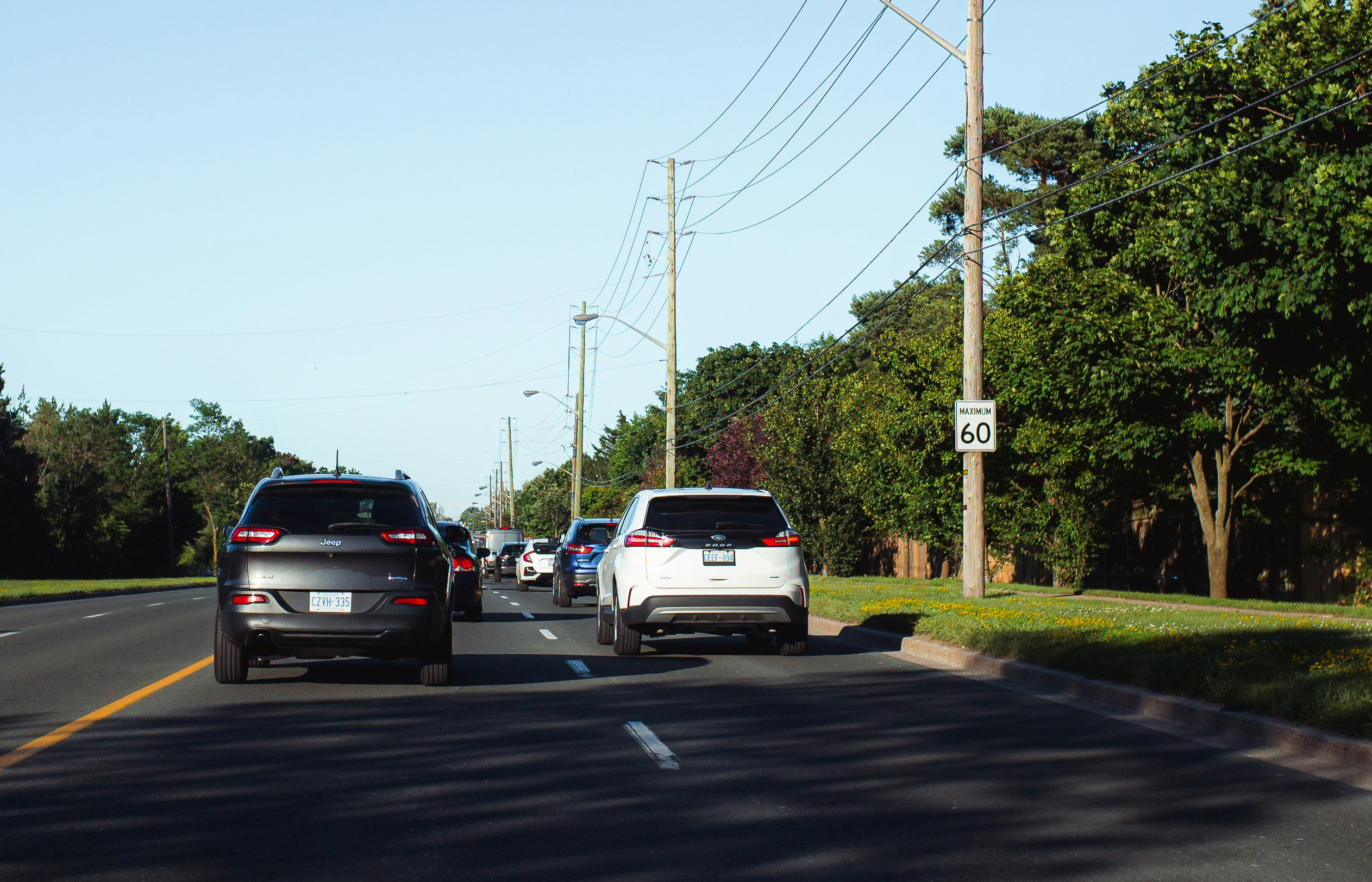
Traffic is not simply a future concern for Halton Hills; it is a concern now.
It already affects our safety, neighbourhoods, and businesses, and costs us precious time we could spend with our families and friends.
You feel it when Guelph Street backs up and traffic spills onto Maple Avenue, Mountainview Road, Mill Street and River Drive.
You feel it in Acton when trucks are diverted onto Wallace Street and other local roads that were never designed to carry them.
You feel it in Glen Williams when heavy vehicles and speeding traffic move through the heart of the hamlet.
You feel it in Norval, where a single closure or collision can disrupt the entire community.
You feel it on Trafalgar Road, Steeles Avenue, Regional Road 25, Tenth Line, Ninth Line, 10 Side Road, 22 Side Road and 32 Side Road.
Parents feel it near our schools. Seniors feel it when trying to cross a busy road. Rural residents feel it when traffic is redirected past their homes. Commuters feel it every morning and afternoon.
Halton Hills is running out of alternate routes—and time.
The Pressure Is Building
Large warehouse developments are proposed along Steeles Avenue and Ninth Line. New development is planned around the Georgetown GO Station. Growth continues in southeast Georgetown, Vision Georgetown across from the Gellert Community Centre, and at the Premier Gateway.
Halton Region is planning a new north-south road between Britannia Road and Steeles Avenue, largely following Fifth Line, with the possibility of a new Highway 401 interchange.
Some major road improvements intended to accommodate growth are scheduled well into the 2030s, 2040s, and even the early 2050s.
That timeline does not match what residents are experiencing today.
We cannot welcome tomorrow’s growth using yesterday’s road network.
Residents Are Sending a Clear Message
During the first phase of the Town’s Mobility Master Plan, residents identified inadequate public transit, congestion, truck traffic, unsafe crossings, and a limited number of reliable routes into and out of Georgetown and Acton as major concerns.
The Town received 417 completed surveys. Residents identified lack of transit as the top transportation issue, followed by congestion and missing walking and cycling connections.
Residents repeatedly called for:
- Better traffic-light coordination and turning lanes;
- Safer school zones and pedestrian crossings;
- Stronger truck-routing controls;
- Alternate routes around Georgetown and Acton;
- Improved connections to Highway 401;
- More reliable connections between Acton and Georgetown; and
- Roads and infrastructure to be completed before major new
The message is not that Halton Hills should never grow.
The message is that growth must be supported by infrastructure—and that infrastructure must not arrive decades after the development is completed.
This Is About More Than Traffic
Traffic planning is also about safety and quality of life.
Regional data identified several Halton Hills road sections with the largest gaps between posted speed limits and actual traffic speeds. These included portions of Trafalgar Road, 10 Side Road, Regional Road 25 and Steeles Avenue.
Approximately 3,300 vehicles travel along 15 Side Road near Stewarttown Middle School each day. Traffic measurements found that 15 percent were travelling at 58 km/h or faster in a 40 km/h zone.
Steeles Avenue already carries approximately 15,000 to 28,600 vehicles per day, depending on the section. Trucks account for as much as 13 percent of traffic along portions of that corridor.
These are not abstract planning numbers. They represent children walking to school, residents leaving their driveways, farmers moving equipment, businesses receiving deliveries, and families trying to get home safely.
No More Growth Today and Roads Tomorrow
If elected Mayor, I will make transportation one of my administration’s top priorities.
A mayor cannot widen a Regional road or a provincial highway with the stroke of a pen. But strong leadership can bring the right people together, set clear priorities, secure funding, and hold every level of government accountable.
Within my first 100 days, I will establish a Halton Hills Traffic and Transportation Action Roundtable, bringing together Town and Regional staff, the Province, neighbouring municipalities, Metrolinx, railway representatives, emergency services, residents, and businesses.
Its mandate will be clear:
1. Create One Coordinated Traffic Plan for Halton Hills
Town, regional, and provincial roads must be planned as a single connected network, not as separate projects controlled by separate governments.
2. Make Infrastructure a Condition of Growth
Major developments must be evaluated based on their combined impact across the entire road network. We cannot continue assessing large developments one property at a time while ignoring the cumulative traffic they generate.
3. Accelerate Our Highest-Priority Projects
This includes the Norval West Bypass, Steeles Avenue, Regional Road 25, 10 Side Road, Trafalgar Road, Ninth Line, railway crossing resilience, and alternate-route planning for Acton and Georgetown.
4. Develop a Town-Wide Truck Strategy
Trucks must be directed to appropriate arterial roads and away from hamlets, schools and residential neighbourhoods wherever practical. Enforcement must accompany the plan.
5. Deliver Immediate Safety Improvements
Signal coordination, turning lanes, safer crossings, school-zone measures, speed management, and targeted intersection improvements cannot all wait for major road reconstruction.
6. Secure Provincial Support for Highway 413 Impacts
If provincial highways and interchanges place additional pressure on Halton Hills roads, the Province must help fund the necessary local and Regional improvements.
7. Report Progress Publicly
Residents deserve to know which projects are being advanced, who is responsible, how they will be funded, and when they are expected to be completed.
The Leadership to Get It Moving
As a Town Councillor and business owner, I understand that significant projects require more than another study. They require leadership, relationships, teamwork, clear deadlines and persistent follow-through.
I have built strong working relationships within our Town, at Halton Region and with the Province, and with local organizations and the business community. I know how to bring people together around a clear objective, keep the dialogue open, and follow through until the work gets done.
Halton Hills needs a Mayor who will treat traffic as a town-wide priority rather than wait until every major road is overwhelmed.
We still have an opportunity to get ahead of this problem, but that opportunity won’t last forever.
The time to protect Halton Hills from future gridlock is now.
Jason Brass
Candidate for Mayor of Halton Hills
Protecting Our Future, Honouring Our Past.